
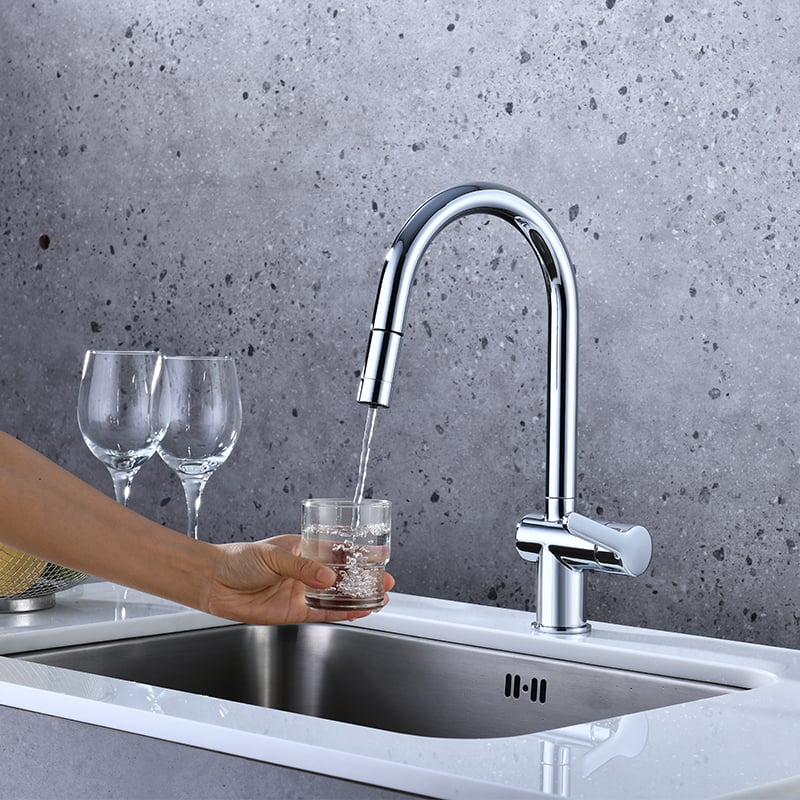
Manufacturers making quality kitchen faucets know that solid brass and stainless steel are must-have materials for the main parts because they just last longer. Brass, which is basically copper mixed with zinc, stands up really well to corrosion problems, particularly when dealing with hard water issues like dezincification. The material's density of around 8.4 grams per cubic centimeter helps absorb vibrations and keeps things structurally sound, so there's less chance of cracks forming over time. Stainless steel of grade 304 creates its own protective layer through chromium oxide that fights off rust, plus it's about 15 percent lighter than brass. Looking at industry standards, brass faucets tend to stick around for over 20 years in commercial kitchens, while stainless-steel versions typically make it about 15 years before needing replacement. Both options beat out zinc-based alternatives hands down. When put through salt spray tests, these metals hold up for more than 2,000 hours, way beyond what most premium plumbing fixtures need to meet basic requirements.
What materials get chosen has a big impact on how reliable equipment stays inside. Take brass, for instance. Its ability to handle heat changes keeps things dimensionally stable within about a 0.05 mm range when temperatures swing around. This helps keep those ceramic discs aligned properly so water flows consistently through the system, staying mostly within 1.5 gallons per minute variance even after ten years of operation. Stainless steel works differently but equally well. The fact that it doesn't absorb minerals means less buildup happens at the valve seats, which naturally extends how long those seals stay intact without leaking. Manufacturers who switch to these kinds of materials report seeing around 92 percent fewer warranty issues over the same time period because they're not dealing with rust-related breakdowns anymore. Plus, having solid mounting points stops hoses from getting bent out of shape, something that matters a lot in commercial kitchen setups where people constantly move fixtures up and down during food prep.
Getting third-party certifications shows that a factory meets those important global safety and performance standards everyone talks about these days. Take NSF/ANSI 61, for instance, which was created by the National Sanitation Foundation. This one checks whether materials might release dangerous stuff like lead into our drinking water supply, basically making sure they pass those health regulations across North America. Then there's the Canadian Uniform Plumbing Code, or cUPC for short. This certification looks at how well products handle pressure changes and if they fit properly when installed in tough commercial settings where things get really busy. The WaterSense program run by the EPA requires faucets to have max flow rates around 1.5 gallons per minute. That helps save about 30% on water usage while still keeping good performance levels. When facilities manage to get all three of these certifications, they tend to test their materials thoroughly and maintain strict control over production processes throughout manufacturing. And guess what? These practices actually result in fewer problems with plumbing systems in places like restaurants, where hundreds of people need hot water at once during lunch rush hours.
Where products are made really affects how strict the quality checks need to be. American manufacturing plants generally get checked every three months by outside auditors who look at everything from safety protocols to finished goods. These factories also keep detailed records of what happens on the production floor minute by minute. When something goes wrong with those shiny PVD coatings on parts, workers can usually spot problems right away before thousands of units hit the market with flaws. Across Asia, many factories certified under ISO 9001 standards focus heavily on standardization too. They run their own inspections once a year but have sophisticated tracking software that connects each finished product back to where its materials came from. Both approaches work well enough, though according to numbers from NSF, American-made items tend to have about 12 percent fewer surface blemishes overall. On the flip side, Asian operations often come out cheaper when companies want special modifications or unique specifications built into their products.
Different kitchen faucet setups, like single-hole, triple-hole, and wall-mounted models, need entirely different manufacturing approaches. When it comes to making those spouts just right, factories equipped with top-notch CNC machines hit an accuracy range of plus or minus half a millimeter. That kind of precision makes sure there's enough space between the faucet and big pots and pans. The money spent on tooling really matters when it comes to how fast things get customized. Special molds cut down waiting periods anywhere from thirty to fifty percent compared to using shared tools across multiple products. Fast-spinning CNC equipment lets manufacturers tweak designs quickly, something especially important for wall-mounted faucets since they require stronger bracket molds. Shops without proper tooling typically wait eight to twelve weeks before getting custom jobs done. But companies that keep their own tooling shops on site can change spout angles in less than ten days flat.
| Capability | Impact on Customization | Lead Time Reduction |
|---|---|---|
| Dedicated Molds | Enables design specificity | 30–50% |
| Multi-axis CNC | Allows complex clearance adjustments | 25–40% |
| Modular Tooling | Supports quick configuration switches | 20–35% |
Prioritize factories with ISO-certified CNC workflows—they deliver consistency across high-volume batches while accommodating last-minute specification changes, preventing costly redesigns mid-production.
The strength of a kitchen faucet manufacturer's supply chain really impacts whether production keeps going when things get tough. According to Logistics Management from last year, companies that have multiple sources for materials, warehouses located closer to manufacturing sites, and smart inventory tracking systems see about a third fewer problems with shipping delays and missing parts. Look for suppliers who actually keep their customers informed through regular updates on certifications and potential roadblocks. Many factories find that having direct contact with an account manager makes all the difference in solving issues before they become major headaches while keeping paperwork to a minimum.
| Reliability Factor | Partnership Impact |
|---|---|
| Raw material diversification | Minimizes disruption risks during demand spikes |
| Automated tracking systems | Ensures 98%+ on-time delivery consistency |
| Local warehousing networks | Cuts lead time variability by 15–22 days |
Evaluate communication protocols for order updates and technical support responsiveness. Suppliers with clear escalation paths resolve quality issues 50% faster. True partnership readiness includes co-investment in logistics innovation and demand forecasting alignment—transforming transactional sourcing into strategic resilience that reduces operational costs and accelerates market responsiveness.
 EN
EN