
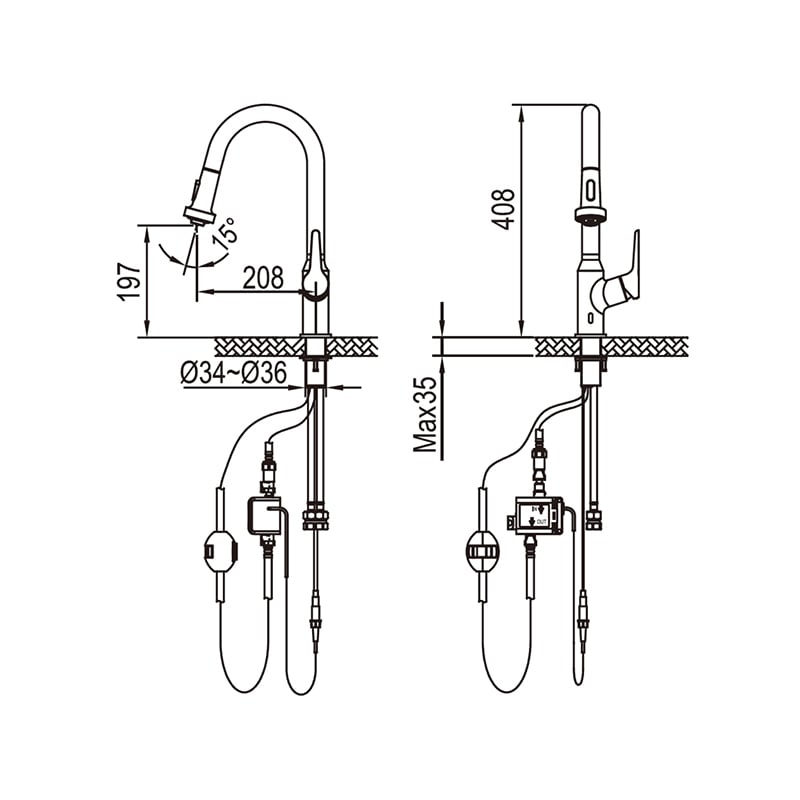
Replacing a kitchen faucet? Focus on three main factors that make all the difference in everyday cooking routines: water flow, how responsive the sprayer is, and whether the handles feel comfortable to operate. Good water flow around 1.8 to 2.2 gallons per minute strikes the right balance between saving water and getting things done fast enough when filling large pots before dinner. Many newer models come with spray heads that have magnetic docking so they stay put when not in use, plus silicone nozzles that don't get clogged as easily from minerals building up over time. And let's talk about those lever handles everyone grabs dozens of times a day. The best ones need less than 2 pounds of pressure to turn, which means much less strain on wrists after turning them back and forth throughout meal prep.
Modern faucets come with this cool feature called adaptive flow. They start with powerful streams around 2.5 gallons per minute when filling pots or containers, then automatically switch down to about 1.5 GPM for rinsing tasks. The thumb controls make this transition pretty seamless. When it comes to sprayers, their responsiveness really matters. A good sprayer needs flexible hoses, proper weight balance, and joints that move freely. Check if it offers complete 360 degree rotation and pulls back into place without any resistance. Manufacturers have also made some ergonomic improvements lately. Lever handles now require roughly 15 percent less pressure compared to traditional knobs, which makes them easier on the hands. Plus there are these handy temperature memory features built in that stop hot water before it gets dangerously scalding. Makes sense why people are upgrading their kitchen fixtures these days!
Premium ceramic cartridges withstand 500,000 cycles—twice the industry standard—with leak resistance validated across 500,000 pressure cycles. Corrosion-proof materials define 2026 durability:
| Material | Salt Spray Test Hours | Scratch Resistance |
|---|---|---|
| PVD Brushed Brass | 1,200+ | 9H pencil rating |
| Marine-Grade 316SS | 1,500+ | Diamond-coat finish |
Solid brass cores eliminate electrolysis between dissimilar metals, and ceramic disc valves prevent wear-induced drips—enabling 15+ years of consistent performance.
The type of sprayer chosen makes all the difference when it comes to how easy a faucet is to use day to day. Pull down models give users extra height clearance, sometimes reaching over 20 inches which works great for those big farmhouse sinks many people love nowadays. On the flip side, pull out sprayers are better suited for kitchens where space is limited since they can swing around sideways quite comfortably. Most high end faucets now come with magnetic docking stations according to Plumbing Manufacturers International data from 2025 showing adoption rates above 78%. These magnets actually work better than older friction based systems because they reduce accidental disconnections by about two thirds. The magnetic connections last much longer too, staying aligned even after thousands of uses compared to regular models that start failing around the 5,000 cycle mark.
Modern kitchens really need fixtures designed for specific purposes these days. Studies show touch free faucets cut down on germs spreading around the kitchen counter by almost half, which is pretty impressive for families. The batteries in these motion sensors last over two years thanks to better lithium technology. Those tall faucet designs with arcs between 9 and 12 inches work great for big pots and pans, but they need at least 36 inches of space above them so they just won't fit under most standard cabinets. For smaller spaces like city apartments, compact faucets measuring around 6 to 8 inches high are becoming popular. Many come with handy extra features built right in. And interestingly enough, about seven out of ten kitchens following accessibility guidelines now feature lever operated taps with single handle temperature controls as standard equipment.
| Design Feature | Family Kitchen | Compact Space | Accessibility |
|---|---|---|---|
| Touchless Activation | Reduces germ spread | Limited utility | Essential for mobility |
| Faucet Height | High-arc (10"+ ideal) | Low-profile (6-8") | Mid-height (8-10") |
| Handle Type | Single-lever preferred | Single-lever required | Lever-only mandate |
Water-saving aerators (1.5 GPM) integrate across all categories without sacrificing spray force—aligning sustainability with real-world cleaning demands.
Voice activated faucets aren't just a fancy gadget anymore they're becoming something people actually need in their kitchens. The numbers back this up too many experts think usage will jump about 40 percent by 2026. What makes these faucets work so well is how they play nicely with most smart home systems already out there. Just say what you want and water comes out exactly when needed without having to touch anything. Those little LED lights on the faucet handle help keep things safe too blue means cold water, red signals hot, so no one gets burned accidentally. And let's talk about those motion sensors modern ones respond in less than half a second which really matters when hands are covered in flour or sauce during cooking chaos.
Today's finish options blend style with practicality in ways we haven't seen before. Matte black and brushed gold have taken over the high end market, accounting for around two thirds of all premium sales because they resist fingerprints and fit right into modern minimalist designs. What really matters though is how serious companies are about safety standards. Products with WaterSense certification limit water flow to just 1.5 gallons per minute while NSF/ANSI 61 certified items guarantee no lead contamination in the water supply. Many top brands are going even further by incorporating recycled brass components and developing new coating technologies that stop corrosion without relying on harmful substances. These innovations keep their shine intact after thousands upon thousands of uses, sometimes well beyond 15,000 cycles according to manufacturer tests.
Getting the right fit when replacing a kitchen faucet makes all the difference for how well it works and keeping those annoying leaks at bay. Before heading to the store, take some time to measure what kind of holes are in the sink (single hole, triple hole, or widespread setup) plus check how thick the sink deck actually is. Don't forget to leave enough space between where the faucet sits and the backsplash behind it either. This matters quite a bit with those fancy high arc faucets in smaller kitchens where every inch counts. And if there are any extra holes left over after installation, grab some deck plates. They stop water from sneaking through gaps and keep things looking neat instead of having random open spots on the sink surface.
Getting the look right means thinking about what already exists in the space. When putting together different finishes, sometimes going for contrast works wonders. Matte black next to shiny stainless steel creates interesting spots where the eye naturally goes. On the flip side, pairing brushed nickel with cabinet handles makes everything feel put together and simple. The shape of the faucet matters too when it comes to matching with the sink. Straight lines work great in contemporary spaces, but those fancy curved spouts really bring out the charm in country style kitchens. Paying attention to both how things actually fit mechanically and how they look together is what makes all the difference. A good faucet should not only function perfectly but also make the whole kitchen feel better designed overall.
What are the main factors to consider when replacing a kitchen faucet?
Focus on the water flow, sprayer responsiveness, and handle comfort. A good flow rate is around 1.8 to 2.2 gallons per minute, while ergonomic handles require less pressure to operate.
How do modern faucet sprayers improve usability?
Modern sprayers feature flexible hoses, weight balance, and 360-degree rotation. Adaptive flow technology adjusts water usage based on the task, enhancing efficiency.
What materials ensure faucet durability?
Materials like PVD Brushed Brass and Marine-Grade 316SS offer excellent corrosion and scratch resistance, ensuring long-term durability.
What are the differences between pull-down and pull-out sprayers?
Pull-down sprayers offer more clearance, while pull-out sprayers are ideal for smaller spaces due to their maneuverability. Both types benefit from magnetic docking.
How does touchless technology benefit family kitchens?
Touchless faucets reduce germ spread and are convenient for busy kitchens, especially those with families or those following accessibility guidelines.
 EN
EN