
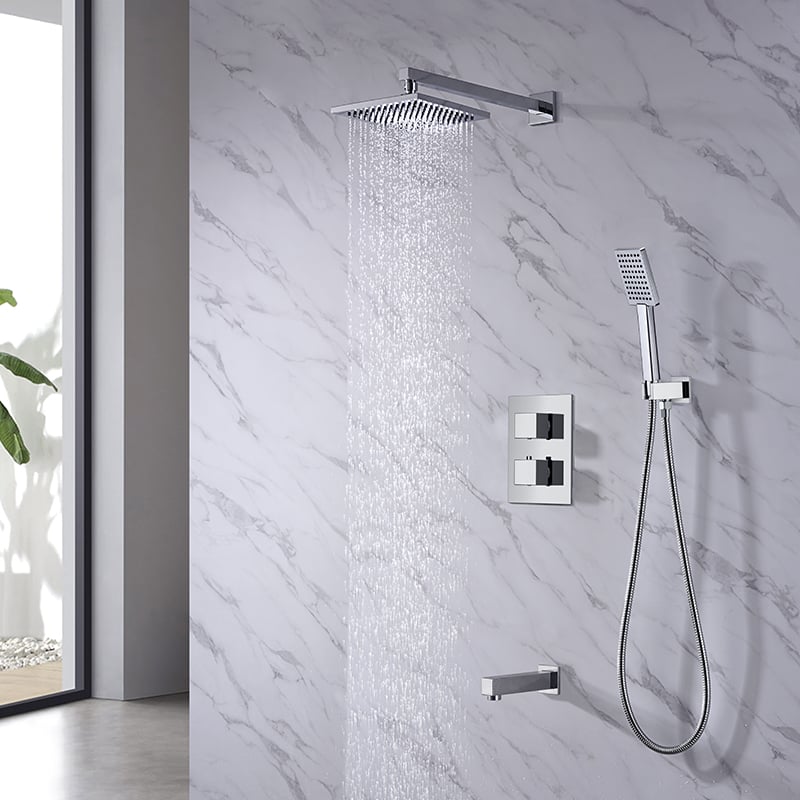
What makes Italian bathroom faucets worth the extra cash? Three main factors stand out: quality brass construction certified by UNI standards, genuine artisan workmanship, and strict adherence to European Union regulations. Most cheap faucets on the market today are made from zinc alloys, but high-end Italian models follow the UNI EN 12165 brass specifications. These go through special tests that show they can resist dezincification problems for well over half a century, even when exposed to really tough hard water conditions. The manufacturing process itself takes time too. Each faucet gets hand polished and put together by skilled workers who spend around 15 to 20 hours on every single piece. Meeting requirements set by REACH and the EU Water Framework Directive means using materials free from lead and getting independent checks on water efficiency ratings. This adds about 12 to 18 percent to production costs, but keeps everything safe throughout its lifetime while maintaining consistent performance and being good for the environment. When we look at how long these faucets last, their internal parts can handle up to 500,000 operations. That's actually twice as much as what many mid-range competitors offer at 200,000 cycles. So instead of just paying more upfront, customers end up investing in something that stands the test of time without breaking down.
A 15-year Total Cost of Ownership (TCO) analysis reveals the economic superiority of Italian faucets—not despite their higher initial cost, but because of it.
| Cost Factor | Mid-Tier Global Brands | Italian Brands |
|---|---|---|
| Initial Purchase | $120 – $180 | $350 – $600 |
| Replacements Needed | 2–3 times | 0 |
| Maintenance Frequency | Annual seal/gasket repairs | Biannual cleaning only |
| Labor Costs | $900+ (15 years) | <$200 |
| Total 15-Year Expenditure | $1,400+ | $750 |
Most mid range models tend to give out somewhere between five and seven years because their valves start wearing down or the brass gets corroded. Italian made fixtures tell a different story though. These can stay completely leak free for many decades since they're built with solid brass cores and those special ceramic cartridges designed to last forever basically. When we look at what happens beyond just the initial price tag, there's all sorts of extra expenses lurking around the corner. Think about having to call a plumber when something breaks, dealing with urgent fixes during inconvenient times, or worse yet facing costly water damage from a small leak that turns into a big problem. All these factors create a much bigger difference in total cost over time than most people realize. Looking at things this way, Italian faucets aren't really items we replace often like regular household goods. Instead they act more like investments that hold their value pretty well year after year.
Italian faucets last so long because they're made from UNI EN 12165 certified brass, which meets European standards for things like limiting lead content, ensuring mechanical strength, and resisting corrosion. Regular brass just doesn't cut it compared to what the UNI standard requires. The special formulation helps prevent dezincification, when zinc actually starts to leave the metal over time in water, weakening the whole thing. Manufacturers put these components through accelerated tests using harsh water conditions and temperature changes that simulate decades of home use. What they find? Very little loss in strength, no real issues with surface quality, and seals that still work great after all that stress. All these specs mean valves stay accurate, spouts don't bend out of shape, and those fancy finishes hold up against mineral deposits even in areas with hard water problems.
The real world doesn't always match up with lab tests, but in this case it does. Researchers followed more than 1,200 Italian-made faucets over a span of 22 years as they were installed in homes across different parts of Europe. Only about 5% needed replacing during that time, mostly because people accidentally broke them instead of the fixtures failing on their own. These units worked well even when exposed to varying water conditions. Some areas had really soft water at around 20 mg/L calcium carbonate while others dealt with extremely hard water measuring up to 450 mg/L. Interestingly enough, there wasn't much connection between how hard the water was locally and whether the faucet would fail later on. People living with these taps generally found them easy to operate, maintained good temperature control, and never experienced leaks from worn out stems or cartridges past their normal lifespan. What this means practically is that manufacturers who designed these products with durability built right in actually succeeded where many others just talk about wanting longevity. The result? Lower expenses over time since homeowners don't have to replace fixtures so often, plus less waste going into landfills because nobody throws away working hardware prematurely.
Homes with Italian bathroom faucets tend to fetch better prices when it comes time to sell. According to Zillow's latest market report from 2023, properties equipped with genuine Italian fixtures actually sold for about 3.2% more than similar homes with regular fixtures. Why? Buyers see something special in Italian-made products. They associate them with lasting quality, meticulous manufacturing processes, and thoughtful design choices rather than just looking good. Take a look at what makes these faucets stand out: those beautifully shaped lever handles, smooth transitions between spouts and sinks, plus top notch finishes like PVD coated brushed nickel. These details transform ordinary bathrooms into personalized sanctuaries. Real estate appraisers regularly point out how these features speed up sales too. In hot markets, homes with Italian fixtures sell about 11% faster. Plus, they get accepted offers across all price ranges from budget homes to high end properties. The return on investment works two ways really: boosting home value right away while also creating a distinct selling point backed by actual craftsmanship.
Italian faucet makers are setting the bar for green performance thanks to their smart approach to water flow engineering. These companies don't just restrict water flow, they actually improve it using special aerated technology that mixes air into the water stream. This creates a rich, steady flow while keeping consumption under 5 liters per minute when pressure hits 3 bars, which is already better than what the EU wants for 2025. The best part? People still love using these faucets. A recent study from Cornell in 2023 showed that folks couldn't tell the difference between regular and low-flow models in blind tests with 320 participants. Property managers should take note too. Each faucet can save around $74 a year on both water and heating bills, adding up to about $1,100 after 15 years. What makes Italian brands stand out is their mindset toward efficiency. They see it not as something to sacrifice for style, but as integral to good design where environmental benefits meet quality feel and lasting value all at once.
 EN
EN