
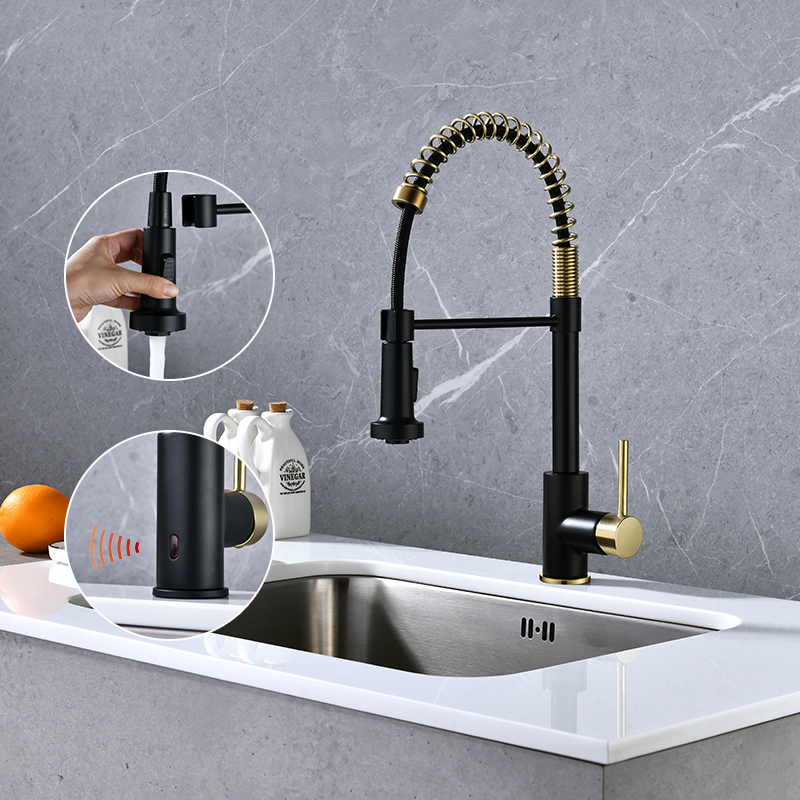
Buying faucets at wholesale prices unlocks significant scalability for large projects. Contractors, developers, and property managers can standardize fixtures across dozens or hundreds of units—reducing per-unit costs through volume discounts and improving cash flow by lowering inventory acquisition expenses. A developer outfitting a 200-unit apartment complex, for example, can save 20–30% compared to retail purchases, directly boosting project margins. Wholesale partnerships also streamline supply chains: single purchase orders replace multiple small transactions, cutting administrative overhead. By leveraging faucet wholesale agreements, businesses secure competitive pricing while gaining the flexibility to scale orders as project phases unfold—transforming fixture procurement from a cost center into a strategic advantage for margin optimization.
Wholesale pricing directly improves return on investment by lowering initial capital outlay without compromising performance or compliance. In a 50-unit hotel renovation, choosing wholesale faucets can reduce fixture costs by $10,000–$15,000, accelerating payback periods. For commercial kitchens, high-cycle faucets purchased wholesale at 30% below retail cut upfront expenses while maintaining durability and code adherence. Standardized sourcing further reduces long-term operational costs: identical replacement parts are readily available, minimizing maintenance downtime. Over a five-year lifecycle, a wholesale-bought faucet can generate 15–20% higher ROI compared to retail equivalents—driven by lower acquisition cost, reduced service friction, and consistent quality. Integrating faucet wholesale into procurement strategy delivers measurable financial gains while upholding performance standards.
Certification compliance is the foundational requirement—not an optional add-on—when evaluating faucet wholesale suppliers. NSF/ANSI 61 ensures materials do not leach harmful contaminants into drinking water, making it essential for all potable applications. ADA compliance guarantees accessibility features meet federal standards, critical for public and multi-unit residential projects. WaterSense certification verifies water efficiency without sacrificing performance—a frequent requirement in municipal and green-building codes. Suppliers must provide verifiable certification numbers and independent lab reports upon request; verbal assurances carry no legal or technical weight and expose buyers to compliance failures, project delays, and liability risk. A simple documentation check—paired with verification through the issuing body’s official portal—immediately separates reputable vendors from unreliable ones.
Procurement managers must align channel selection with project-specific constraints: timeline, budget, and logistical capacity. Direct manufacturers typically offer the lowest per-unit cost but require higher minimum order quantities (MOQs) and longer lead times—ideal for large-scale developments with predictable schedules. Distributors stock inventory and provide faster shipping with lower MOQs, making them optimal for phased builds or urgent replacement orders. Alibaba.com offers broad vendor access, but quality and delivery consistency vary widely; vetting should focus on verified on-time delivery rates (≥98% recommended), response time, and third-party inspection history—not just price or ratings. Regardless of source, written contracts must explicitly define lead time, MOQ, payment terms, and defect resolution procedures. Matching these variables to project requirements ensures the most cost-effective and operationally sound faucet wholesale partnership.
Faucet type should be selected based on real-world usage—not just aesthetics or unit cost. Pull-down faucets with flexible hoses improve efficiency in high-volume commercial kitchens, speeding up pot filling and cleanup cycles. Single-handle models deliver intuitive temperature control and reliability across variable tenant usage, making them ideal for multi-unit residential projects. Hands-free sensor faucets reduce surface contact and contamination risk, supporting infection control in healthcare facilities and public restrooms. Crucially, maintenance frequency must inform selection: mechanical designs like single-handle units require minimal service, whereas sensor-based systems need periodic battery replacement and sensor cleaning. Prioritizing workflow alignment over short-term savings maximizes long-term operational efficiency and user satisfaction.
Material choice has a direct, lasting impact on durability, corrosion resistance, and total cost of ownership—not just upfront price. Brass offers excellent machinability and inherent antimicrobial properties, though it’s heavier and more expensive. Stainless steel provides superior corrosion resistance and is naturally lead-free—making it ideal for food-prep areas and medical settings—but can be more challenging to cast precisely. Zinc alloy is lightweight and economical, yet less durable under heavy use or aggressive cleaning protocols. The table below summarizes key considerations for project-level decisions.
| Material | Durability | Corrosion Resistance | Relative Cost | Best for |
|---|---|---|---|---|
| Brass | High | Excellent (with coating) | High | Luxury residential, high‑end commercial |
| Stainless Steel | Very high | Excellent (inherent) | Medium–High | Kitchens, medical, food service |
| Zinc Alloy | Moderate | Moderate (coating dependent) | Low | Budget housing, low‑traffic areas |
Selecting the appropriate material prevents premature failure and costly replacements—especially in high-frequency environments where lower-grade alloys degrade faster. Total cost of ownership, not just sticker price, determines true value in faucet wholesale.
Wholesale purchases reduce per-unit costs, standardize fixtures, and improve cash flow. They also offer scalability for large projects, streamline supply chains, and boost project margins.
Key certifications include NSF/ANSI 61 (ensures material safety for drinking water), ADA compliance (accessibility standards), and WaterSense (water efficiency and performance).
Faucet selection depends on usage. Single-handle models are ideal for residential projects, pull-down faucets work well for commercial kitchens, and hands-free designs suit public or healthcare facilities requiring hygiene control.
Durability, corrosion resistance, and total cost of ownership vary by material. Brass is durable and antimicrobial, stainless steel is corrosion-resistant, and zinc alloy is economical but less robust.
Review lead times, MOQ flexibility, logistics support, certifications, and contract clarity. Align these factors with your project’s timeline, budget, and operational needs.
 EN
EN